Structured planning, SMART goals, and stakeholder alignment for the JourneyLand K–8 character education pilot.
Duration10-day instructional sequence
Session length90 minutes per session
Grant$5,000 NEA Foundation
PartnerKnowledge Quest (NPO)
Project Description
JourneyLand is a K–8 Character Education Program (CEP) designed to address student apathy and support social-emotional development through a structured, story-based instructional model. The curriculum integrates literacy and character education using an original narrative as anchor text — engaging virtues such as courage, perseverance, motivation, and integrity through reading and application.
The project is supported by a $5,000 Student Success Grant from the National Education Association (NEA). The JLCEP pilot is implemented through Knowledge Quest (NPO), where approval was granted to conduct the pilot.
Purpose: evaluate program effectiveness, collect feedback and data on student engagement and outcomes, and identify areas for improvement — while modeling the program for instructors to facilitate independently in the future.
10-day instructional sequence with 90-minute lesson/reflection sessions per day. Final scheduling coordinated with Knowledge Quest leadership.
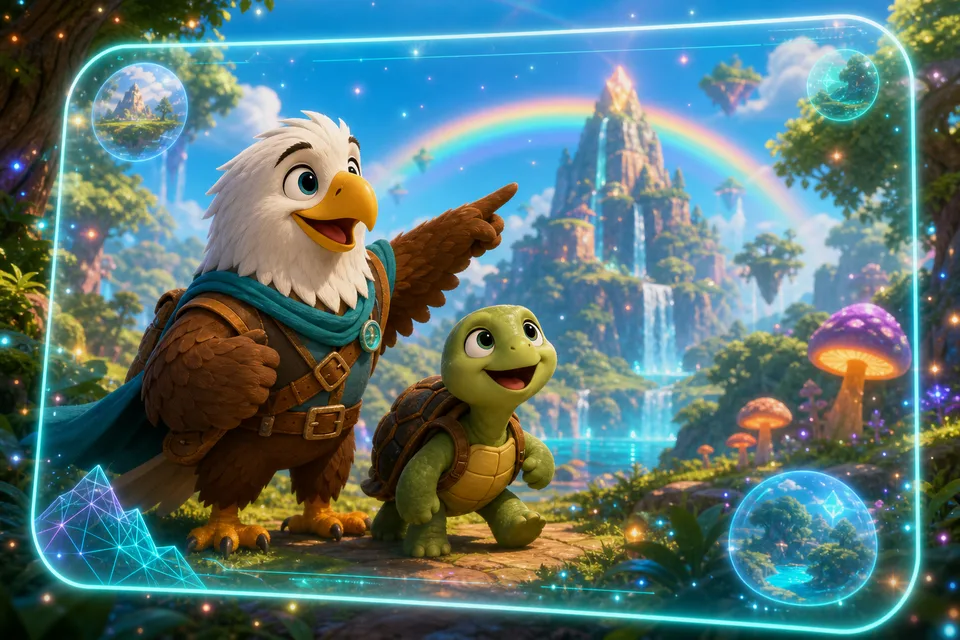
Instruction centers on a narrative featuring Courage the eagle — overcoming doubt while navigating challenges throughout JourneyLand. Sessions include teacher-led reading, partner reading, guided discussions, comprehension checks, vocabulary development, and structured reflection.
In Scope
Implementation of the JLCEP pilot at Knowledge Quest
Delivery of 10-day instructional sequence with 90-minute sessions
Narrative-based instruction, discussion, and reflection activities
Instructional workbooks and character CARDS (Character Attribute Recognition and Development System)
Data collection via pre/post assessments, observations, and reflections
Out of Scope
Formal instructor training and professional development
District-wide implementation beyond the pilot
Technology or application development
Parent program expansion
Merchandise and brand development
SMART Goals
Understanding · Application · Connection
Understanding
By end of 10-day pilot, 90% of students demonstrate understanding of targeted character attributes (courage, perseverance, integrity) by accurately identifying and defining each attribute, discussing examples and non-examples, and explaining good character — measured via JourneyLand Learner Identity Snapshot, vocabulary tasks, and guided discussions.
Application
90% demonstrate ability to apply character understanding by identifying attributes in story-based and real-life scenarios, distinguishing positive attributes from opposing behaviors, and explaining how attributes influence decisions — measured via scenario activities, discussions, and response tasks.
Connection
90% demonstrate ability to connect character attributes to personal lives by reflecting on behaviors, identifying growth areas, and explaining how traits support success — measured via written reflections, verbal discussions, and structured reflection activities.
Budget — $5,000 NEA Foundation Grant
Materials and Printing$2,000Student workbooks, instructional materials, storybooks
Illustration Services$1,500JourneyLand character and visual materials
ISBN and Publishing Costs$300Registration and publishing for JourneyLand text
Consulting and Subject Matter Expertise$800Character education consultation; SEL alignment
JL CEO (R.J. Morgan) responsible for acquiring supplementary materials.
Major Deliverables
Implementation of the 10-day instructional program
Student manuscripts
Student workbooks
Student CARDS deck
Student materials
Structured lesson plans and instructional sequence
Pre- and post-assessment tools
Student reflection artifacts
Final data summary report evaluating pilot outcomes
Stakeholders & Roles
Knowledge Quest LeadershipProject sponsor; approval, oversight, site access
Program Designer and Implementation LeadDevelopment, delivery, data collection, execution
Instructors and FacilitatorsClassroom management, feedback on efficiency and engagement
StudentsPrimary participants; data through participation and reflection
Future District LeadershipPotential stakeholders for adoption based on pilot outcomes
Approval Process
Initial clearance from Knowledge Quest leadership before launch.
Planning phase covers scheduling and student involvement.
Informal check-ins during implementation for consistency and issue resolution.
Final report summarizing data presented to stakeholders after pilot ends.
Final approval based on execution quality, requirement fulfillment, and student outcomes.
Conclusion
The JourneyLand CEP pilot represents a structured approach to integrating character education within a literacy-based instructional model. SMART goals (Understanding, Application, Connection) ensure learning is meaningful and measurable.
Project Management Institute. (2017). A guide to the project management body of knowledge (PMBOK guide) (6th ed.).
Wiley, D. (2018). Project management for instructional designers. EdTech Books.